

This is a short story about my family, the Khalaps. It’s a story of a band of swashbuckling traders turned industrialists and landlords, whose empire collapsed at the hands of patriarchy and a regime change.
This is also a reflection of how it impacted me. If "the story of the father is embedded in the son”, then what does that make of the story of the bloodline?
The Ancestors (1300s - 1500s)
The earliest records of the Khalap family tree go back to 1370! We hail from the Konkan region, a long, narrow strip of land along the western coast of India. It runs from roughly north of Mumbai, in Maharashtra, all the way south into Karnataka. It’s bounded on the east by the Western Ghats and on the west by the Indian Ocean.
Smack dab in the middle of Konkan is its crown jewel, Goa. It’s my favorite place in India, and more importantly, where the Khalaps made their mark.
Today, Goa is the vacation state of India. Its lush, tropical climate breeds inviting beaches and warm waters. Bachelor parties and Europeans merrily visit, indulging themselves in showers of seafood and alcohol. If they’re adventurous, they’ll see a ‘party shack’ on the beach, where they can find every illicit drug they’ll ever need.
But back then, my ancestors enjoyed Goa for much different reasons. The Indian Ocean is one of the oldest maritime trade highways in the world, linking Arabia, East Africa, and India together. And for this bountiful trade, Goa was India’s front door.
Goa, with its tropical climate and monsoon rains in the summer, made it an ideal cradle to grow coconuts, cashews, and rice.
The monsoons also made it perfect for seasonal trade. Arab dhows and Indian ships sailed with the wind in one direction, and would sail back home months later.
In the Hindu varna system, society was divided into four groups: Brahmins (priests/scholars), Kshatriyas (warriors/rulers), Vaishyas (traders/merchants), and Shudras (laborers).
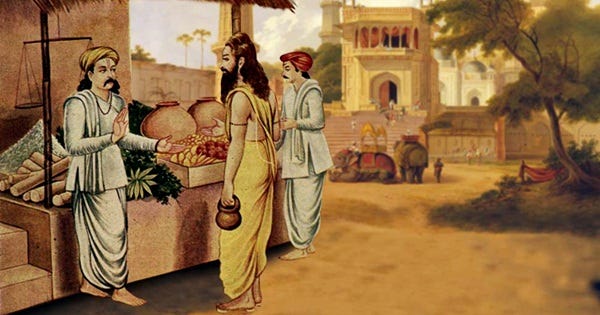
The Khalaps were members of the Vaishya caste. In the 15th and 16th centuries, they were heavily involved in this maritime trade. They had a fledgling fleet of two ships, used as the backbone of trade operations.
They exported rice, supari, textiles, and timber to ports in Hormuz, Cairo, and even Malaysia. In return, they imported Persian luxuries like dates, pearls, and carpets. The staple import was horses: Arabian horses were lauded by the Indian nobility for both their class and utility. Sultans used them as a status symbol. They paraded with them and rode them in ceremonies. They began to maintain huge cavalry forces, on the order of thousands of horses per army.
The thriving horse trade eventually attracted the attention of the Portuguese, who landed (then swiftly conquered) Goa in the early 1500s.
The Catholics (1500s)
As a metaphor, Dune is a bit too on the nose. The Europeans loved their spice!
For centuries, spices from South Asia flowed into Europe through the Arabs and Venetians. This frustrated the Western European monarchies, who sought to cut out the middlemen. In the 1400s, the Portuguese, emboldened by naval supremacy, sailed to India for themselves.
In 1498, Vasco da Gama landed in Kolkata. Soon after, the Portuguese realized that Goa was a better strategic location. It was a safer location, had a weaker ruler, and crucially, was the hub of the sweet, sweet horse trade.
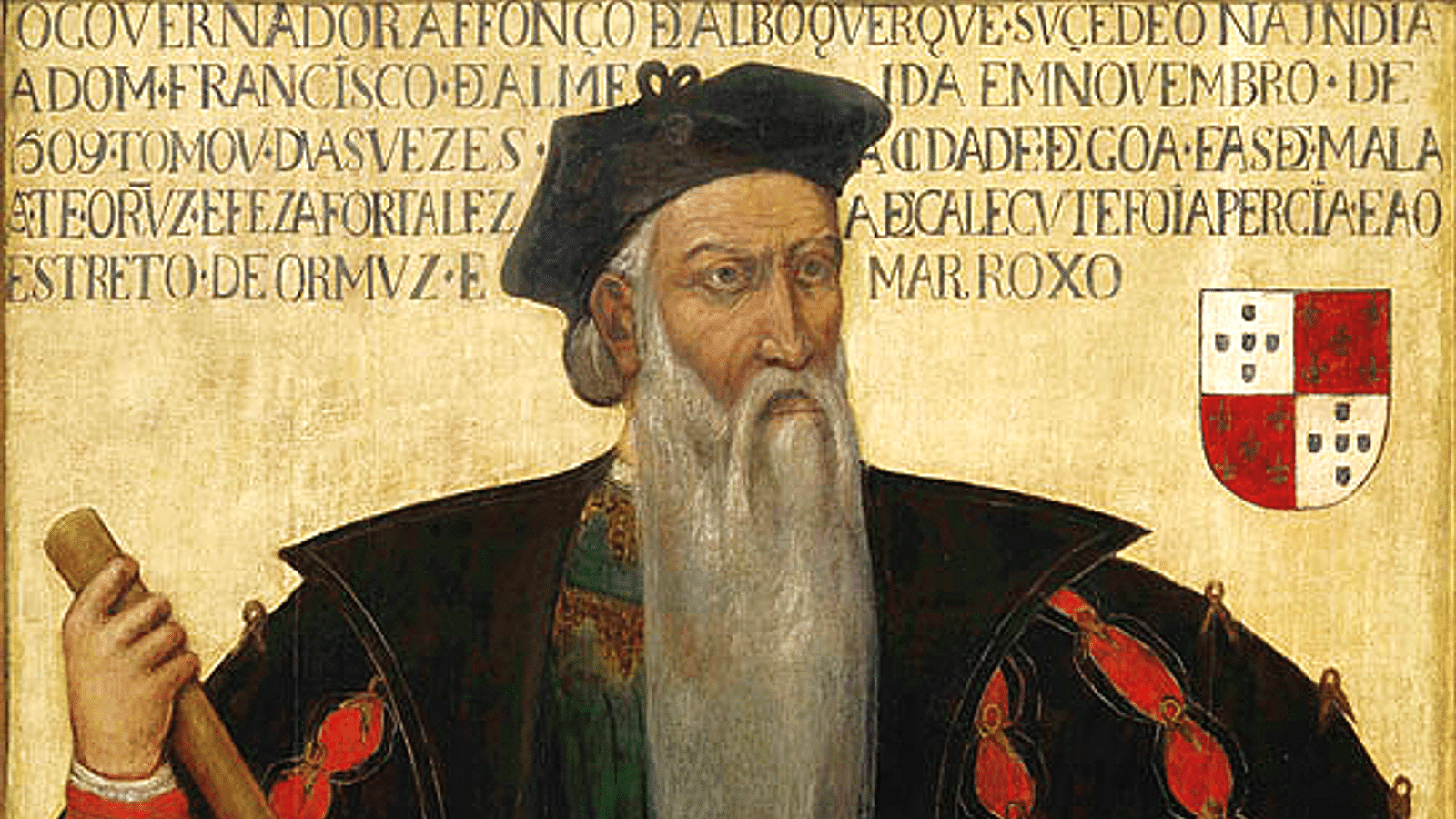
In 1510, Alfonso de Albuquerque attacked Goa, starting a 450-year Portuguese reign in this corner of the world. Goa became the capital of the Estado da Índia, the Portuguese headquarters of all of Asia. The regime had changed, and the Khalaps had to change with it.
The Portuguese rule immediately caused turmoil for the maritime merchants of Goa. Thanks to the trade with the Arab world, many of the merchants were Muslim. Those who followed the Quran usually enjoyed favor with their trading counterparties in the Middle East. Unfortunately for these Muslim traders, the Portuguese were God-fearing Christians. Naturally, they immediately massacred the Muslim population of Goa. The Crusades never end, they just pause temporarily!
At first glance, this drastically reduced the competition for Hindu traders (like the Khalaps). But would the Vaishya caste be allowed in business? Or would they too face a sour fate?
The answer was that, for now, they’d survive. Albuquerque was pragmatic. He knew that he needed a merchant network to facilitate his empire, and the Portuguese had very few of their own in the early years of its conquest. Hindu traders were allowed to continue trading (and even given protection!) if they paid the proper tribute and taxes.
Thanks to the Portuguese military might, they monopolized the most profitable commodities, horses and spices. But the Khalaps and other Vaishya could still trade rice, supari, coconuts, timber, and textiles.
The Khalaps continued to grow their trading business, but became weary of their future. In the middle of the 16th century, Catholic missionaries began their Inquisition, erecting massive churches and establishing missions. Favor increasingly went to those merchants who converted to Christianity.
To their credit, the Khalaps stayed true to their Hindu faith. But they still wanted to make their money! They moved more inland, away from the main ports in Old Goa, to seek relief from the watchful eyes of their Christian rulers.
The Shake Up (1600s)
By the 1600s, the Khalaps had settled in Mapusa, in North Goa. This location provided a haven for our Hindu merchants.
It was close enough to Portuguese Goa to participate in trade, but inland enough to have autonomy and create enterprises. They began to expand their network of trading partners, first, via inland caravan routes to the Mughals of Surat and the Deccan powers of the far east. These routes had stability, but were slower and less profitable than maritime options.
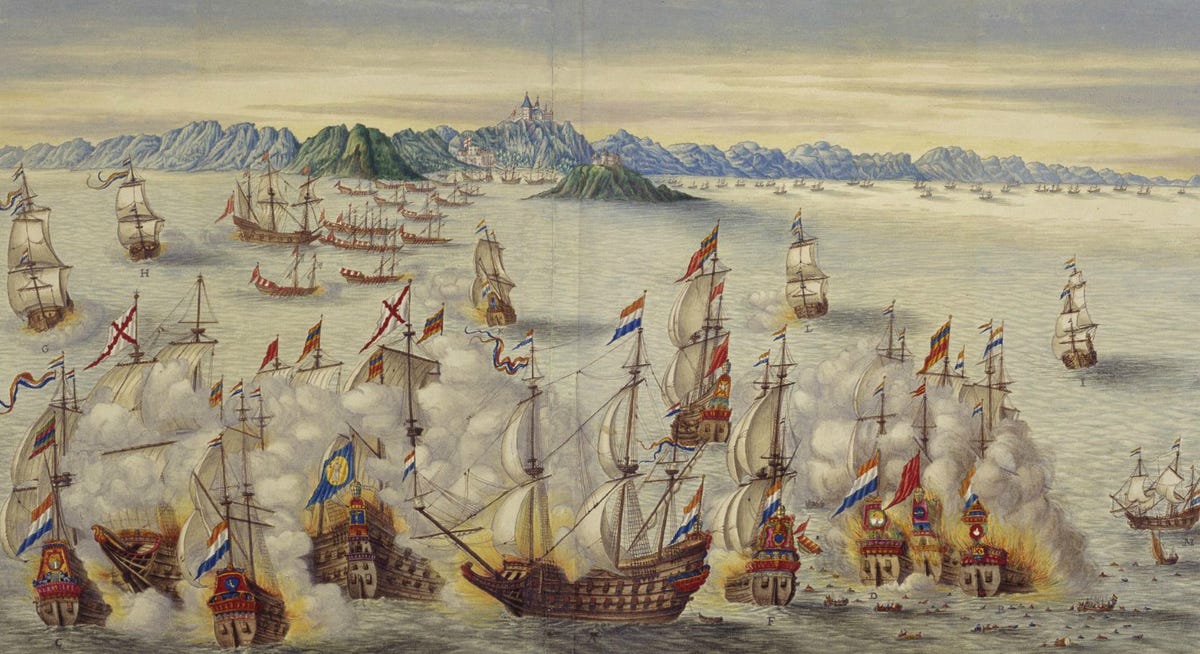
And then, their big break! In the 1600s, the Dutch and British East India Companies arrived in the Indian Ocean. They were strong, financially and militarily. They broke up the Portuguese monopoly, effectively opening up the seas for Hindu merchants.
The Khalaps took advantage of this breathing room and promptly began trading Northwards. They traded with British Bombay (now Mumbai) and again, the Mughals in Surat (now Gujarat), this time with the faster and profitable channels in the Indian Ocean.
The trading enterprise was thriving again, but the Khalaps did not rest on their laurels. They remembered what happened to their trade routes with their previous European colonists. They had no expectations that the British would be friendly to them forever. To create generational wealth, they couldn’t just be merchants. They had to expand.
The Capitalists (1700s - 1800s)
At this point, the Vaishya merchants had accumulated handsome sums of capital through their trade. Now, they began to put this capital to work. In the period, it’s unclear what industries the Khalaps were involved in, but they likely followed the playbook of other Goan Vaishyas of this time period.
As I mentioned, Goa is known for its bountiful natural resources, and Mapusa was no different. When you go to Goa, you get the sense that the world is tinged in reddish-brown. Don’t worry, it’s not your rose colored glasses. The ground, hillsides, and even building stones have this distinct hue. That’s because Goa’s soil is chock-full of iron and aluminum oxides. In the late 1700s, people started becoming aware of its mining potential.
Goan timber, sourced from the dense, hardwood forests of the Western Ghats, was plentiful and strong. Given its coastal culture, Goan Hindu carpenters and shipwrights were known to be some of the finest craftsmen in India. Vaishya used these attributes to their advantage to finance shipbuilding enterprises.
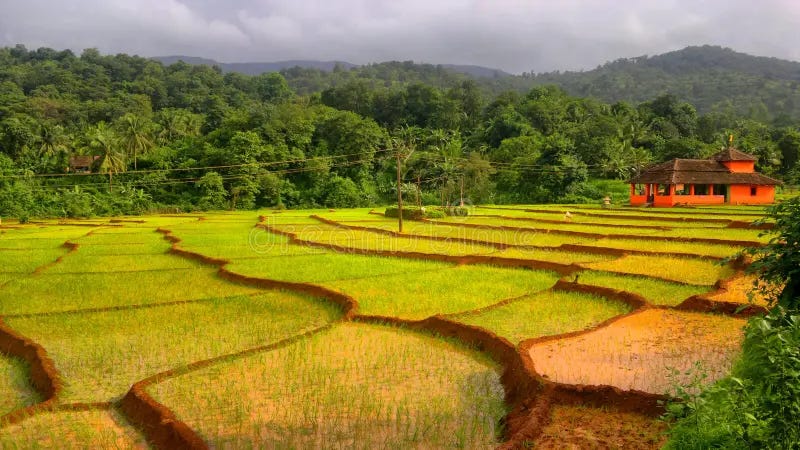
And this is where I won’t hide any ugly details. Remember the trade of rice, supari, cashews, and coconuts? The Vaishya class began to realize that they could consolidate the power of these crops. Instead of just trading, they created plantations to grow for themselves.
They established a tenancy system. The Vaishya became Bhatkars, the landlords of Goan agriculture. They leased their land to Mundkars, peasants who tirelessly tilled the land and lived in mud huts. For the ‘privilege’ of working on this land, the Bhatkars heavily tax the Mundkars, and if the rent or taxation were ever unpaid, they’d forcibly take the land back from the peasant.
Such became a vicious cycle, where Vaishya exploited labor from the peasants, became their landlords, and even their moneylenders.
As a result, Vaishya ruthlessly accumulated eye-watering amounts of capital and land. As I mentioned, we’re not sure what industries the Khalaps were explicitly involved in at this time, but they certainly were part of this landlord, rent-extracting class.
To me, this is a darker mark on the Khalap history. I’m a red-blooded capitalist, but am very sympathetic to the Georgist principles on land reform. As we’ll see later on, some of the Khalaps have tried to resolve their karmic debt in this regard. I’ll leave it to the reader to forgive them or not.
The Industrialists (1900s-1950s)
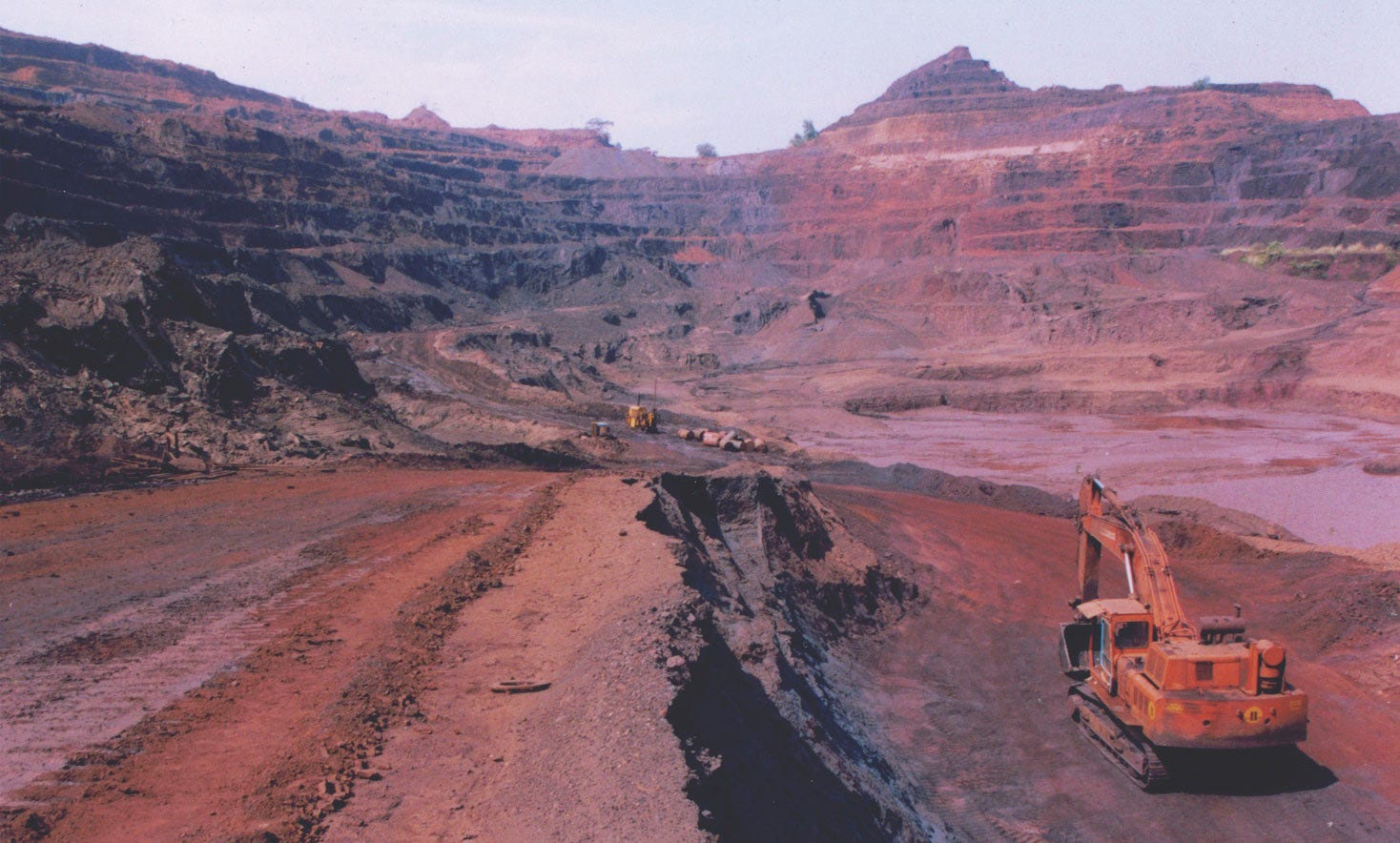
Into the 20th century, the Khalaps continued to build their wealth through trade and enterprise. Under the Portuguese rule, there was notably no income tax, so our Khalaps were able to accumulate capital, reinvest all of the profits, and build monopolies in their industries.
This is where we introduce my great-grandfather, Jagganath Khalap, who ushered in the modern industrialist era for the Khalaps.
By this time, a class of capitalist families had separated themselves into a class of untouchable financial and political powers (think something synonymous with the chaebols of Korea).
The Dempos, an old Brahmin family from Panjim
The Salgaocars from Vasco
The Chowgules from Margao, famously strong in shipbuilding
And finally, the Khalaps from Mapusa
It was now the 1940s, and the global industrial supply chain was humming. To support the technological booms associated with the world wars, the Great Powers were hungry for raw materials to transform into finished goods for their ships, planes, and tanks.
Specifically, Japan had come calling. In the 30s, it was rapidly industrializing and needed India’s natural resources to power this growth. In the 40s, they became embroiled in military conflicts with China and the USA, and needed to fuel their military push.
Portugal was a neutral state in these world wars, so it gave Japan, an Axis power, a loophole to obtain natural resources without getting shipments blockaded by Allied powers.
The families saw an opportunity to double down on mining and create a profitable export business to Japan. To lock in their monopolies and consolidate power, they created an agreement amongst themselves.
Each family would exclusively control a region of Goa (for the Khalaps, this was Mapusa in the North) in which they would be the sole miners of iron ore and manganese. And because each family owned thousands of acres of land in their region, they didn’t have to worry about upstart competition. They simply wouldn’t lease out land intended to start a competing business!
Jagganath Khalap found himself at the helm of a powerful business, eager to stretch his influence wider. He pushed hard on the mining industries, even repurposed some of the heavy machinery to build Goa’s road systems. He was the landlord for most of Northern Goa. And now, he had a perfect monopoly.
But it wouldn’t stay this way forever.
Boatloads and Boatloads (Mid 1900s)
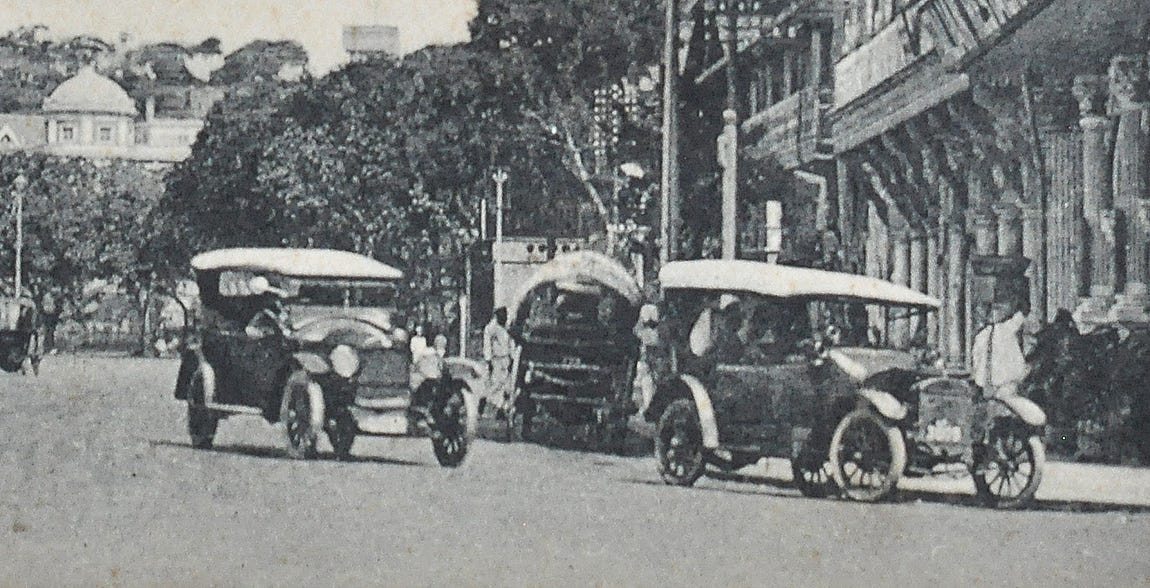
At the height of his power, Jagganath Khalap was extraordinarily wealthy.
In the mid-1900s, most Indians were impoverished. In 1947, India’s GDP per capita was 250 - 300 Rupees a year.
100-200 Rupees a month could comfortably support an Indian middle-class lifestyle. Jagganth’s brother, himself a doctor, lived very well at 1,000 Rupees a month. For comparison, an Indian Civil Service officer, a highly coveted role that put you in the upper crust of society, earned ~1,500 Rupees a month. Both were handsome salaries that afforded wealthy lives.
Jagganath, by comparison, was earning 10s of millions of Rupees per year! In the 40s, there was ~ 1 car per 10,000 people in India. Jagganth himself owned 5 of them, putting him in the ranks of the top industrialist / aristocratic families in the country. The guy was filthy rich.
Wait, so why am I not a prince? Why am I not writing this to you on a Yacht docked in the Maldives, Mai Tai in hand?
The answer is a combination of populism and patriarchy.
Populism (Late 1900s)
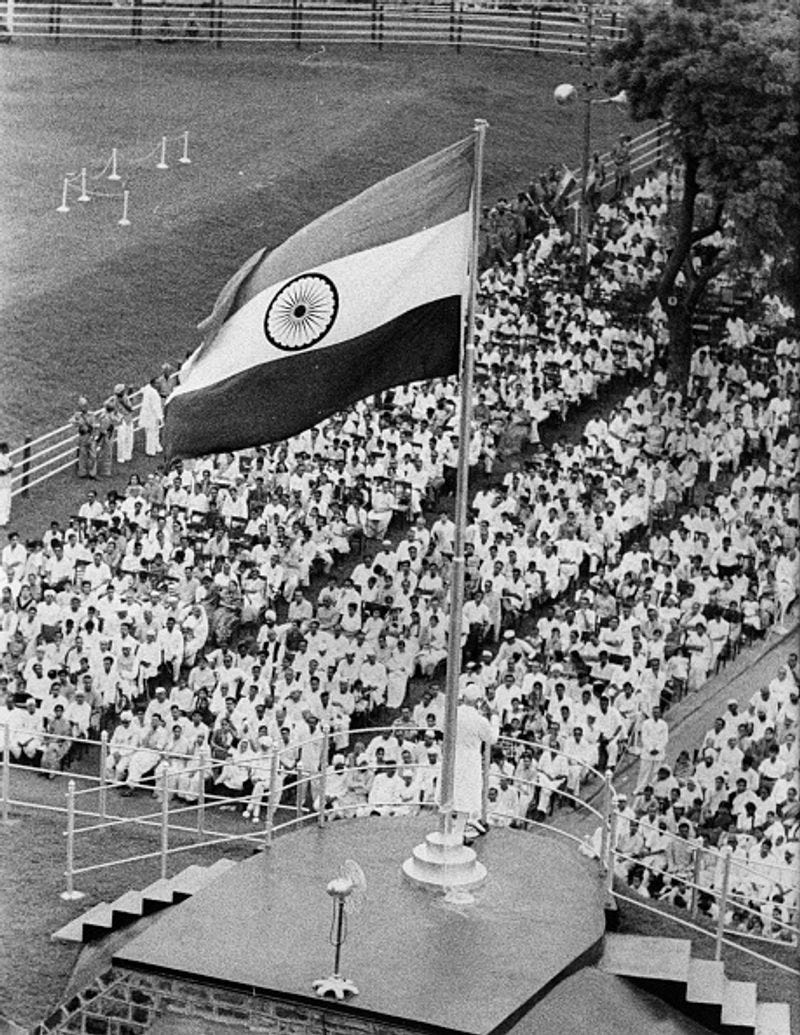
In 1947, India finally achieved its freedom. The British left, leaving in its wake a bloody partition and the prospect of rebuilding a nation. But my beloved Goans wouldn’t get their freedom until 14 years later, in December of 1961.
The Portuguese, under the rule of the dictator Salazar, stubbornly held on to its colonies across the world, still viewing Goa as its foothold into the east. The Indian Army launched Operation Vijay to annex Goa, and within 36 hours, the Portuguese surrendered.
This marked the beginning of the Khalap descent. Unlike the zero-income-tax Portuguese regime, Jawaharlal Nehru’s Indian administration was heavily socialist. They enacted steep progressive taxes in the ballpark of >90% for incomes over 1 million rupees. This made it difficult to reinvest the capital needed to maintain the monopoly.
Nehru’s government also pursued land to the tiller laws, which Indira Gandhi later cemented. This reduced the power of the traditional Batkar class by securing tenancy rights for peasants and often redistributing land back to these people.
The Khalap real estate fortune was slowly evaporating (and rightly so!), and the mining business would soon be on its last leg.
Patriarchy (Late 1900s)
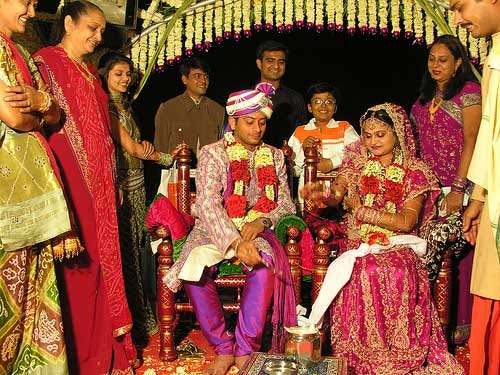
India is a notorious patriarchal society.
Arranged marriages are common, with dowries exchanged from the bride's family to the groom's family for accepting the proposal. There are too many heartbreaking stories of children as young as 14 being shipped off to marry grown men.
Wives move away from home, and live in the same house as their in-laws, expected to do the cooking and cleaning and perform their ‘womanly duties’. Thankfully, tides are turning, more women in India are educated and working than ever, but for Jagganath and his family, patriarchy was the rule.
My grandmother was born as Nandini Khalap, Jagganath’s second child. The family now had two daughters. Then another. And another. And three more. The Khalap family soon became a Brady Bunch comprised of seven sisters!
By all accounts, they were smart, capable, and educated. My grandmother studied journalism and is now a published author of multiple books. Her sisters were similarly brainy. But that wasn’t enough for Jagganth and his wife.
Jagganath’s wife, my great-grandmother, mourned that she never had a son. Because of Indian tradition, when they married, they left home to live with their in-laws. When they all grew up, she would be completely alone.
Jagganath, for his part, refused to pass down the business to any of his daughters. Why else do you think he tried to conceive seven times in an effort to have a son? Instead of training up his daughters to hand over the reigns, he foolishly decided to wind down the business.
Maybe he would have eventually had a change of heart and chose one of his daughters as a successor. The world would never get to find out. Jagganath would die of an untimely heart attack, without his affairs in order. From there, his estate devolved into a mess.
The mining enterprise was sputtering to a halt. The real estate empire had crumbled at the hands of a new administration. The centuries-long Khalap dominance in the Goan industry was no more.
They had traded with the Arabs, fended off European invaders, and built India’s modern industry. Still, at the end of it all, they collapsed under the weight of their hubris, their unfailing desire to uphold the patriarchy.
The Aftermath
By the time my mother was born in the 70s, the complexion of the Khalaps had changed. The seven sisters were marrying and having kids, and their new families, in search of better economic opportunity, moved to bigger cities in Maharashtra like Mumbai and Pune.
In Goa, the Khalaps were still comfortable, but from my mother’s account, they weren’t extravagantly rich. She grew up in Mumbai, but spent the summers in Goa, in a big house with all her cousins, where she could play. She remembers a normal, upper-middle-class Indian lifestyle. At the Goan house, they had two cars, along with a maid and a cook.
For some of the Khalaps, that wasn’t enough. They felt that they had been unfairly cheated out of some of their land and tried to work through the court systems to reclaim it. But for others, the ending was fair.
My great-uncle, Harsha Khalap, is the last Khalap of his generation (the rest of his sisters/cousins changed their last names when they were married). He told me this:
Harsha’s father (Jagganath’s brother) made him a promise.
“Stop looking backwards and trying to reclaim the wealth of the past. Instead, look forward, think about what you can create yourself. Anyway, the wealth created by real estate was largely unethical. Better to distance yourself from the deeds of your ancestors. The people who were given the redistributed land deserved their share.”
Harsha’s father moved his family from Goa to Pune, a partly symbolic move to show that his clan was starting over. They would no longer claim any rights to the Goan real estate. They would create their own life.
It’s working out well for Harsha. He studied intensively in metallurgy and started a successful manufacturing facility in India, which he hopes to pass down to his son.
My grandmother married Arun Mahadeshwar, who himself had a similar come-up. He started a small factory in Mumbai assembling electronic panels. It’s still operational today and provided the livelihood for my mother to come to the USA and start this awesome life for me.
The Khalaps now live across the world (seven sisters make a lot of kids!), and I am lucky to have many amazing aunts, uncles, and cousins in India and beyond.
The other powerful Goan families have had a different fate.
The Dempos sold their mining interests in 2009 for $350 million. They’re diversified across different industries, and notably own the Dempo Sports Club, one of India’s most famous football clubs.
The Salgaocars continued their run in industry, though their family has had infighting for years, with factions suing each other in court for the wealth. One of the Salgaocars even married into the Ambani family, worth $100 billion!
Finally, the Chowgules maintained their dominance in shipbuilding. There are still Chowgule shipyards in Goa and beyond. They parlayed this money into building Chowgule College, one of Goa’s premier schools.
All three families were hit hard by the 2012 Supreme Court ban on iron ore mining in Goa, but have been able to diversify into other businesses.
My Reflections
I’m happy that everything worked out the way it did. I love my life.
If the Khalaps kept at their industrial dominance, I’d probably still be in India right now, training up to run some family business that I probably wouldn’t like. I wouldn’t have got the opportunity to be born and raised in the USA, the best country in the world. My childhood was comfortable and happy. I got to play basketball and eat burritos. I played Xbox on the weekend and got milkshakes with my friends. It was the best.
And I wouldn’t have had the latitude or drive to start a company of my own!
It's easy to think of some pipe dreams where I was a pseudo-Indian aristocrat, but that sounds like a dull and unfulfilling life. Instead, I get to be like my enterprising ancestors, starting a business for myself, mapping out uncharted territories, and taking risks.
It makes sense why I love business so much. It’s the family legacy. I love reading business histories and biographies. I love breaking down business models. It’s addicting to make users and revenue go up and to the right. It’s all a beautiful game to me.
It makes me take my craft seriously, knowing that my ancestors built businesses that dwarf mine. I want to be better than them, grow bigger than them. But I want to do it in the right way. I don’t want my businesses to be rent-seeking. I want them to be innovative and value-adding! It’s why I’m so enthralled with software and ‘high-tech’ businesses. It’s one of the few industries in the world where you can add to the pie, instead of fighting others for an ever-shrinking slice.
Mostly, I think about Jagganath Khalap, and even my grandfather, Arun Mahadeshwar. May they both rest well. I wonder what they would say to me right now. Would they be proud of my work? What advice would they have for me? What fascinating stories do they have to tell?
How would they push me to go harder? What would they say about my work ethic, focus, and consistency? I wonder if they’d give me tough love or be more uplifting.
I want to be greater than both of them. I want to be the greatest Khalap of them all. Charlie Munger says to become friends with the eminent dead. Now, they’re also my competition.
It is my destiny. It’s in my blood.
Footnotes:
Much of this history was orally conveyed to me during a dinner in San Mateo. Thanks to Harsha Mama, Padmashri Aaji, and Raju Aajoba for your words. They have changed my life.
Because it was orally conveyed, I’m confident that there are inaccuracies. I’ve done my best, but I will continue to refine this essay's accuracy over time.
‘Official’ sources debate who the ‘four families’ of Goa actually were. Based on what I was told (admittedly biased because we are all Khalaps!), I created the list.
There are a few narrative books written by Khalap merchants that are from well before Jagganath’s time. I am working on getting my hands on them.
I am immensely proud of my family legacy. The dark parts are as important to highlight as the successes.